Fictional satire · securities litigation & cybersecurity
Coinbase Legal: “The Statement Was Wrong. Your Lawsuit Was Wronger.”
A fictional courtroom parody about misleading statements, pleading standards, and what a dismissal does not prove.
By Editorial Desk · October 23, 2026 · 3 min read
Key findings
Fictional satire: these points describe the article’s themes and imagined scenes, not actual statements, verified events, or findings of wrongdoing.
- The courtroom exchange is entirely invented; it is not a transcript or an actual statement by Coinbase, its executives, lawyers or the judge.
- The cited report describes dismissal on scienter and loss-causation grounds despite two cybersecurity statements being identified as misleading.
- Dismissal of a securities-fraud complaint does not certify cybersecurity, and inadequate pleading does not establish that fraud occurred.
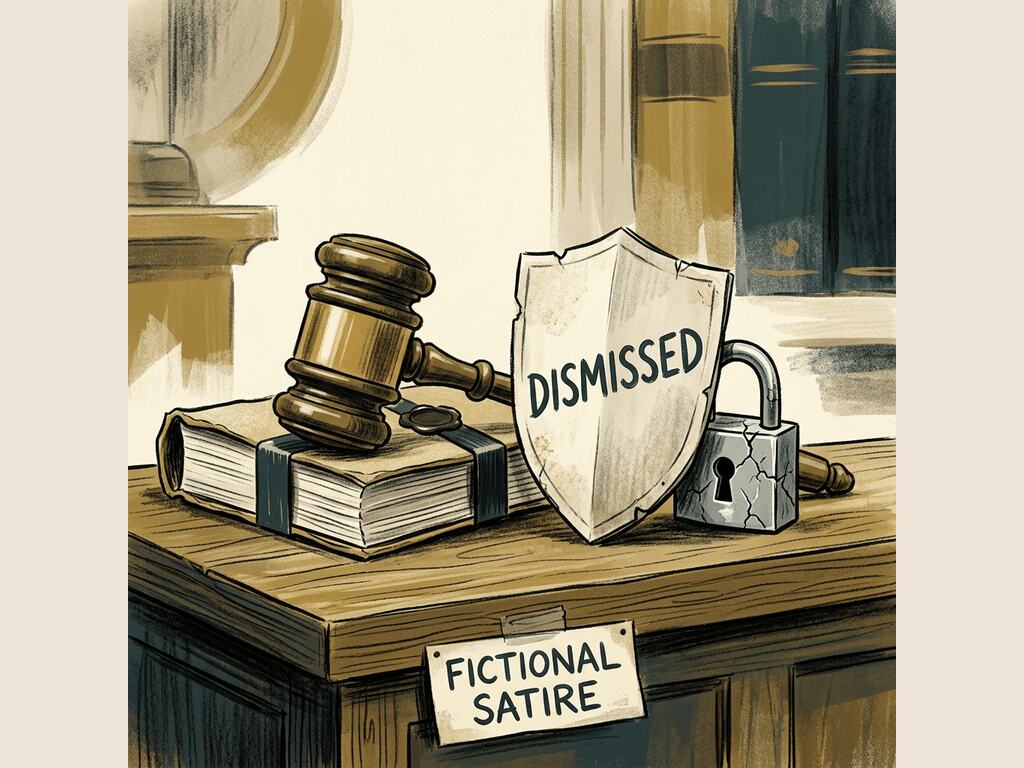
Fictional satire. All courtroom dialogue and character statements are invented, not quotations from a hearing or statements by Coinbase or its lawyers. The background is attributed to the linked report on Castle v. Coinbase. Dismissal for insufficient pleading is not a finding that fraud occurred, a certification of cybersecurity, or a requirement that every fraud case contain a written confession. No affiliation or endorsement is asserted.
A fictional courtroom parody inspired by the reported dismissal in Castle v. Coinbase: the complaint identified two misleading cybersecurity statements but failed on scienter and loss causation. Dialogue below is invented. vitallaw
JUDGE: Your client warned that a vendor’s security “may be” breached when, according to the complaint, a breach had already happened.
COINBASE LAWYER: Your Honor, we prefer “forward-looking language describing a backward-looking event.”
PLAINTIFF: You said your security program was robust!
COINBASE LAWYER: “Robust” is a wonderful word. Sounds like an audit. Costs like an adjective.
JUDGE: And “one of the most compliant crypto companies in the world”?
COINBASE LAWYER: Promotional enthusiasm, Your Honor. Like “world’s best coffee,” but with discovery costs.
PLAINTIFF: So the company knew?
COINBASE LAWYER: Which person?
PLAINTIFF: Coinbase.
COINBASE LAWYER: Coinbase is a corporation. Please identify the human, the date, the email, and ideally the sentence beginning, “I knowingly intend to commit securities fraud.”
PLAINTIFF: Surely senior executives should have known.
COINBASE LAWYER: “Should have known”? Thank you. We’ve now downgraded your allegation from fraud to a disappointing performance review.
JUDGE: What about the misleading statements?
COINBASE LAWYER: A misleading statement is only the appetizer. They ordered the securities-fraud tasting menu. They still need scienter.
PLAINTIFF: Meaning intent or sufficient recklessness?
COINBASE LAWYER: Meaning this hearing has become substantially more expensive.
JUDGE: And loss causation?
COINBASE LAWYER: They must connect the alleged fraud to the claimed loss. “The stock went down and we were upset” is a mood, not a pleading.
PLAINTIFF: Then what exactly does “robust security” guarantee?
COINBASE LAWYER: That the word “robust” successfully passed through legal review.
JUDGE: Complaint dismissed.
COINBASE EXECUTIVE: So the court certified our cybersecurity?
COINBASE LAWYER: Absolutely not. We won the motion. Please do not make us defend that sentence next.
The actual distinction: the reported ruling was about whether the plaintiffs adequately pleaded securities fraud—not a certification that Coinbase’s cybersecurity was sound. The court treated much of the compliance language as puffery or opinion and found the allegations insufficient to establish the required state of mind for the two misleading cybersecurity statements. vitallaw