Satire & commentary
A Fictional Satire About Protocol Wind-Down Language
A satirical commentary on Goldfinch, Warbler Labs, retail distribution, and the language of an orderly wind-down.
Key findings
Fictional satire: these points describe the article’s themes and imagined scenes, not actual statements, verified events, or findings of wrongdoing.
- The fictional chronicle uses an institutional off-ramping metaphor to satirize the shift from growth promises to maintenance.
- Its editorial theme contrasts distribution and integration announcements with unresolved questions about distressed legacy loans.
- Imagined motives and narrative staging are devices of the parody, not evidence of a coordinated exit or intentional misconduct.
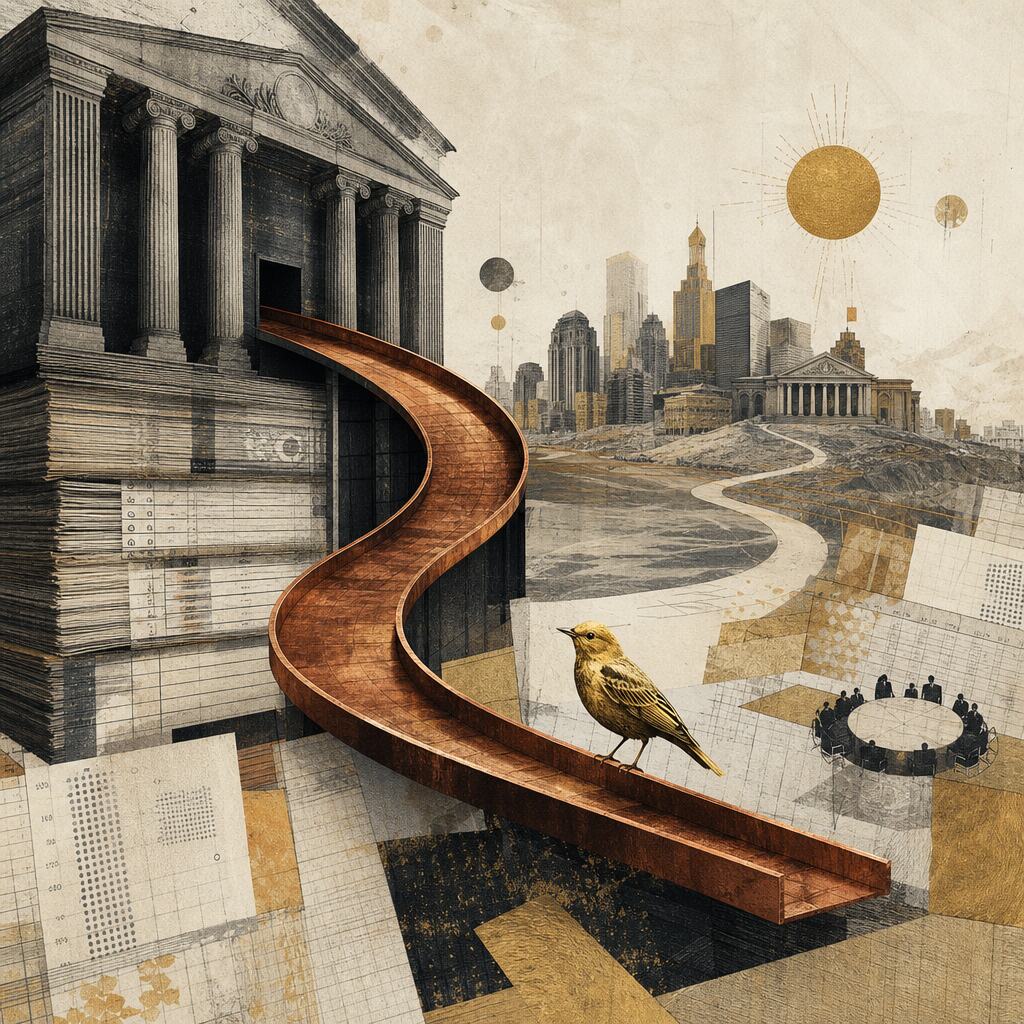
Satire and public-record commentary: The imaginary committee, dialogue, and comic translations below are fictional. Public reporting and product pages are identified separately. Neither those sources nor the jokes establish a coordinated exit, deliberate distraction, insolvency, or wrongdoing by Warbler Labs, Revolut, or any individual.
A Fictional Satire About Protocol Wind-Down Language
An imaginary meeting of the Committee for Extremely Orderly Language, 2026
The Imaginary Translation Desk
At our entirely invented committee meeting, the phrase “we are collecting old loans” is sent back for insufficient syllables. “An asynchronous legacy-recovery posture” receives a standing ovation. The joke is about language, not evidence that anyone hid a plan.
The real background is less theatrical: The Defiant reported depositor claims about losses and described Goldfinch's wind-down. Those reported amounts and allegations are not an independently reconciled loss calculation here. [thedefiant]
Revolut's public GFI pages provide a separate example of retail distribution. A listing page does not establish a negotiated Warbler Labs partnership, a promotional motive, or current availability for every customer. [Revolut GFI page]
Our fictional translator is delighted by the word “access.” The reader's less glamorous questions remain: access to what rights, at what risk, and with what prospect of repayment? Wider distribution does not answer those questions.
From "Undercollateralized Real-World Yield" to Maintenance Mode
This is a comic comparison of language and investor questions, not an account of an internal plan or a verified sequence of coordinated events. Quoted jokes are invented.
| Phase | Public context | Fictional translation | Reader question |
|---|---|---|---|
| Phase 1: Real-World Lending | Off-chain borrower credit | "The spreadsheet has acquired a passport." | Who monitors borrowers and enforces repayment? |
| Phase 2: Retail Access | Public GFI product pages [revolut] | "The menu is longer; dinner is not guaranteed." | Does buying a token give me a direct claim on the loans? |
| Phase 3: The Orderly Shutdown | Reported maintenance transition [thedefiant] | "The roadmap now has a collections department." | What services continue, what do they cost, and who receives recoveries? |
GIP-87: The "Everything Is Fine, But Bye" Proposal
Reporting describes GIP-87 as a maintenance and wind-down proposal. It does not, by itself, establish a connection between a retail listing and that decision. [thedefiant]
- Maintenance Mode: The reported emphasis shifts toward servicing legacy positions. In our fictional meeting, the roadmap receives a filing cabinet. [thedefiant]
- Recovery Horizon: A schedule for collections is not a guarantee of payment. Our imaginary committee discovers that changing the calendar font does not accelerate a borrower.
- Token Rights: A governance token and a loan claim are not interchangeable. A visible trading page does not establish that a particular customer can trade, or provide a current price or guaranteed liquidity.
The Neo-Bank User Experience
"I understand the button. I would also like to understand the rights."
— Imaginary customer; invented dialogue
Instead of treating an interface as due diligence, a real customer can ask three questions. Revolut's product page is a starting point, not an assurance of suitability: [revolut]
- What instrument am I buying, and which legal rights does it provide?
- What do the dated governance records say about development and remaining operations?
- Am I a lender with a contractual recovery claim, or a token holder with different rights? Buying GFI does not itself make the buyer a beneficiary of a borrower-recovery trust.
Next Steps for the DAO
Our fictional committee concludes that a good wind-down update should contain fewer euphemisms and more dates, costs, responsibilities, and repayment definitions. That is the editorial criticism: readers deserve understandable information, not an accusation about an undisclosed internal plan.
The final fictional motion is carried unanimously: “Please attach the plain-English version.” Nothing in this parody recommends buying a token or establishes manipulation, concealment, or wrongdoing.